Enneagram Worldwide
The Enneagram Narative Tradition


Home > The Narrative Tradition
The Enneagram Narrative Tradition
The Gifts of the Narrative Tradition
Overview

Enneagram VieosSee videos of the nine Enneagram types
 

The Gifts of the Narrative Tradition

By Terry Saracino, President
Enneagram Studies in the Narrative Tradition

Adapted from an article by the same name in the April 2012 edition of TALK, an online newsletter published by Enneagram Association in the Narrative Tradition (EANT)

“The human voice is the organ of the soul.”
– Henry Wadsworth Longfellow

On May 8, 1989 in Santa Fe, NM, I found myself sitting in a circle with 25 others from around the country in a beautiful room with windows all around for a week-long course on the Enneagram. This would be the first time I met Helen Palmer and her teaching assistants – representatives of the nine types. My heart had been caught by the Enneagram a few months earlier in Denver when my first teacher had animatedly described the types in vivid detail for a full weekend. But, as this week unfolded and I watched Helen interview the types, I knew with certainty that this was how I wanted to teach the Enneagram.

Why was this method of teaching – what we refer to as the Narrative Tradition – so powerful back then and still is today? For those who have never attended a Narrative training, picture a panel of representatives of each type being interviewed by a facilitator. By listening to representatives of each Enneagram type share their personal stories and reveal their particular inner worlds and realities, you can discover how to recognize personality differences from direct experience.

Oral transmission of information and wisdom is as old as human civilization. A few years ago I came upon a useful description of “orality” in a dissertation on the Jamaican Rastafari by Dr. Jeanne Christensen, a friend and colleague of mine who is a professor at the University of Colorado. She writes:

“Orality…is immediate, because sound cannot be paused. It disappears as soon as it is uttered. It is active…dynamic…a total expression. Reading is an isolated individualistic expression. The oral tradition, on the other hand, commands not only the storyteller, but the audience to complete the community. Orality is a process, movement, experience rather than an imperious permanence.”

Dr. Christensen’s description of orality resonates with me and holds several keys to understanding the power of the Narrative. It is a process, not a technique. It is dynamic, always changing. And it involves a community, a “field” created between the person whose story is being told and the listening audience. In a word, it is alive.

The Narrative Tradition, based on interviewing and interacting, is a process and invites us into a relationship with our inner territory. We use the content of the Enneagram and make an experience of it. When we describe our patterns on panels using our capacity for self-observation, we began to see them differently. We get some distance from them. Underlying motivations become clearer. Something clicks. Our patterns begin to loosen. As we try to make ourselves clear to the audience, we gain more insight. Insight is an essential first step toward change. Working with the insights we glean on panels helps us make the necessary changes that grow our souls.

Kinship among panelists develops from mutual sharing and recognition. It is an enormous relief to be in the company of people who understand us because their stories are so similar to ours. Their openness, insight and self-acceptance give us courage to accept our weaknesses and embrace our strengths. We learn how others work with the same behavior patterns, and that supports us. When I thank people who come from the community for taking the time to share their stories on panels, they almost invariably say to me, “I learned so much. Thank you for asking me to come!”

A compassionate audience is also an important part of the Narrative method. We use the practice of following the breath “in and down” so as to be as present as possible to the panelists in all centers – grounded, open hearted, and open minded. The audience receives what is shared and is impacted by it. They may react to what is shared either positively or negatively, but their response teaches them.

We often have the experience of suddenly understanding hidden motivations: “That’s why they act like that, not just to get under my skin! It’s how they see the world.” I remember listening to a Five panel years ago. In a difficult relationship with a Five at the time, I shed tears of understanding as the panelists demonstrated their difficulty coming forward and connecting. Phrases such as: “I had to withdraw. I was afraid that they were going to steal my soul” were spoken. This understanding helped me depersonalize my reaction. My relationship was no longer so painful to me. When we see the reasons why others act the way they do, our hearts open and we can never see the person or the type in the same way again. The first line in my notes from that workshop in Santa Fe is “Improves human relationships almost immediately.” So true.

Being part of a narrative audience builds compassionate presence. By listening to others in a compassionate way, we begin to open ourselves. The room gets quiet, a palpable presence pervades the space, and something shifts. In that movement we extend beyond our limited awareness – not just cognitively, but also emotionally and somatically – to obtain (for a moment, at least) a glimpse of the greater reality of existence. “Transforming lives, creating a more compassionate world,” the tagline of our organization, is not just words, but truly what happens in our work.

The methodology of the Narrative Tradition grounds the Enneagram in the experiences of thousands of individuals and validates the objective reality of the map. Helen’s first book outlined the key themes that emerged after years of interviews with panelists. We continue to use the experiences of panelists to validate the map and deepen and enrich its lessons.

The “field” created in teaching this way offers a different experience from reading. The Enneagram becomes three-dimensional, embodied in the form of a particular person and story. You hear the words as well as get a sense of the non-verbals of type. While we are each unique representatives of type with our own personal story, the energetic blueprints of type become evident as we observe. In a closing circle in the Enneagram Intensive a few years ago, a participant shared: “The Enneagram has turned from an idea into real people. Now, it's a real, living, breathing model for me.”

Ultimately, we are all each other’s teachers. David Daniels speaks about the Narrative method as being a democratic process. It is not a hierarchical system. We get away from the mode of “I’m the teacher; you’re the student. I know and you don’t.” We are always learning and benefiting from the wisdom of each other. Self-discovery is key.

The Enneagram is not “an imperious permanence” but a dynamic map, and the stories of thoughtful, articulate and self-aware individuals are among the most fertile sources of its growth over time. It is through these sacred stories we share with each other that our souls grow and we develop more compassion for others. Through this method, our minds gain insight and understanding, our hearts are touched, and our bodies experience the energies of the types.

If you’ve never experienced the Narrative, we invite you to attend one of our trainings. If you’re a long timer, we look forward to seeing you again. This way of teaching keeps the material alive and fresh. No two panels are ever the same. Since my first workshop in 1989, I still find myself touched by the longing within in each of us to know ourselves better and the willingness to share our inner journeys with others. It’s what keeps me engaged with the teaching after 23 years!

Note: I would like to thank Carole Whittaker for our conversation in October 2010, which planted the seeds for some of these reflections.

This article was modified from an article previously published in the April 2012 TALK Journal, a monthly publication of the Enneagram Association in the Narrative Tradition.

Overview of the Narrative Tradition

The Narrative Tradition is an extraordinary teaching method that offers a unique and personally transformative experience of the Enneagram.

By listening to representatives of each Enneagram type share their personal stories and reveal their particular inner worlds and realities, you can discover how to recognize personality differences from direct experience, rather than simply learning about the Enneagram from a particular “authority.”

The Narrative Tradition promotes an open exploration of each personality type. In our view, there is no better way to explore, learn and teach than through this interactive method of panel interviews. Through a sophisticated inquiry method, the Narrative Tradition demonstrates the types, their struggles, dilemmas, strengths and separate paths of development. The types continuously teach us about themselves at ever deepening levels of awareness, and we learn from exploring with them.

Ultimately, the Enneagram is an “inside job” of determining your type and coming to know and understand your own focus of attention, core beliefs, coping strategies and path of development. The value of the Enneagram does not come mainly from identifying your type based on external behaviors, but mainly from understanding how behavioral patterns relate to each type’s focus of attention, motivation and personal experience. The active role each participant plays in noticing his or her own patterns helps create conscious awareness, which leads to conscious conduct.

The Narrative Tradition recognizes that implicit non-cognitive learning is at the heart of what we know about the world of relationships and meaning. We cannot fully understand the motivations, inner maps and integration of the psychological and transpersonal worlds without direct personal experience.

The panel interviews bring the Enneagram alive through meaningful conversation and insights. They are set within a rich context of self-observation practices, practical exercises for each type, directed meditations, movement exercises and facilitated interactions between the types.

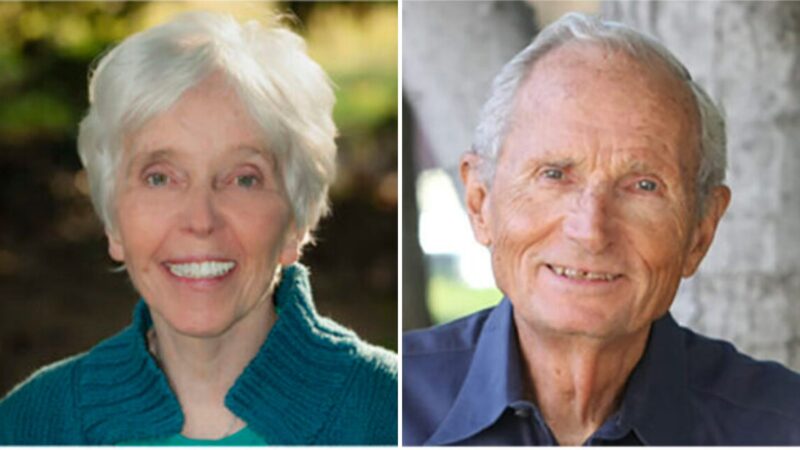
Helen Palmer and David Daniels, MD, founded the Enneagram Professional Training Program (EPTP) in 1988. The foundational course, our premier offering, is the Enneagram Intensive™, which is also the first section of the EPTP.

Self-discovery and self-expression are fundamental aspects in each participant’s path of development. The intelligent expression of body, heart and mind can best be grasped by direct energetic experience involving interactions and practices. The Narrative Tradition’s method of inquiry is further enhanced through explicit cognitive learning and written materials, both of which heighten clarity, facilitate discussion and are an important part of our trainings.

Acceptance and understanding often come from appreciating what something is not. Our teachings in the Narrative Tradition are not about history per se, although each type has its own history. The teachings do not refer to ancient roots or transmission, and there is no spiritual leader, oracle of knowledge or specific lineage attached to these teachings other than the grassroots philosophy of self-discovery.

Top of page

View videos of the nine types speaking for themselves: Type 1 Type 2 Type 3 Type 4 Type 5 Type 6 Type 7 Type 8 Type 9

Enneagram Teacher Certification Program

Enneagram Teachers in the Narrative Tradition

Enneagram books, tapes and DVDs


Explore the Enneagram | Determine Your Enneagram Type | The Narrative Tradition | Books, Tapes and DVDs | Contact Us
Enneagram Workshops | Enneagram Teacher Certification | Teachers in the Narrative Tradition
Enneagram and Spirituality | Enneagram in Relationships | Enneagram at Work | Enneagram for Therapists

       © 2006 - 2009 Enneagram Worldwide and the Enneagram Professional Training Program LLC™
       (formerly the Authentic Enneagram – www.authenticenneagram.com)

866-366-8973 (toll-free)
513-829-3457 (outside the U.S.)